Europe is back in the game! Mistral Le Chonk is catching up with its rivals.

Europe has a model worth shortlisting on its merits. Mistral Large 4, nicknamed Le Chonk, is catching up with the strongest open-weight coding models. For European organisations, performance combined with downloadable weights and deployment choice makes it interesting. It does not win every task or solve personal-data protection by itself.
What has actually changed
Following the public preview on 6 October 2026, Mistral released improved weights later in October. Preview scores and the newer release must be kept separate: Terminal-Bench 4.0, for example, rose from 28% to 41%.
Large 4 accepts text and images, supports a context window of up to one million tokens, and offers structured outputs and tool calling. Its mixture-of-experts architecture contains roughly a trillion parameters. The model card counts 49 billion active parameters per token, or 52 billion including the input and output layers. Sparse activation reduces computation; it does not make this a laptop model. The model card and deployment examples imply substantial infrastructure.
The weights use the Mistral Ecosystem Open-Weight License, rather than plain Apache 2.0. Model-as-a-service businesses in particular face separate commercial terms. The API documentation still carries a Public Preview label: downloadable weights do not establish a production SLA.
Benchmarks: competitive, with clear limits
These results for the improved release come from charts in Mistral's announcement. They are published measurements, not tests I ran. Higher is better, but percentages across different rows are not comparable.
| Test | Mistral Large 4 | Comparison |
|---|---|---|
| FrontierCode 2.0: repository-change quality | 19.7% | DeepSeek V4.1 Flash 19.3%; GLM 5.3 17.8% |
| Terminal-Bench 4.0: agent tasks in a terminal | 41% | DeepSeek V4.1 Flash 1017 31%; GLM 5.3 40% |
| FinWorkBench / Finch: financial work | 73.3% | DeepSeek V4 Pro 0813 67.4%; Kimi K3 77.3% |
| BrowseComp: difficult information retrieval | 84.5% | DeepSeek V4.1 Flash 1017 83.4%; Kimi K3 91.2% |
Mistral beats the specified DeepSeek versions in these tests. A 0.4-percentage-point FrontierCode lead is hardly a universal victory, however. The DeepSeek version also differs between rows.
Kimi remains ahead on financial work and demanding search. In Surge Code's blind pairwise evaluation, Mistral won just 22% of preferences against Claude Opus 5.5, versus 56% against DeepSeek V4.1 Flash. Preference rates are not task-completion rates. The independent Artificial Analysis profile reports an Intelligence Index v5.0 score of 26 for High reasoning. Coding competitiveness does not establish overall intelligence leadership.
My conclusion for everyday work is to run an evaluation. Finch does not test your Czech emails, BrowseComp does not review your contracts, and a large context window does not guarantee reliable reasoning across every detail.
What corresponds to Claude Code or Claude Desktop?
The offering extends beyond chat. Le Chat is moving under the Vibe brand. Vibe documentation separates work and coding modes, with a gradual interface migration.
| Need | Mistral option |
|---|---|
| Chat, research, documents and work assistance | Vibe Work on web and mobile |
| Repository agent in the same category as Claude Code | Vibe Code: CLI, VS Code and remote sessions |
| Business-system integration | Connectors and custom remote MCP connectors; plan and admin settings apply |
| n8n, Make or custom application automation | API and Mistral Studio |
| Native desktop app comparable to Claude Desktop | I could not verify a standalone public installer in the checked documentation; web and mobile are confirmed |
Vibe Work brings together files, document libraries, web access, Canvas, Skills and scheduled tasks. A useful assignment would be a meeting brief assembled from authorised sources, followed by a draft response. Vibe Code reads and edits files, runs commands and prepares repository changes. Configure permissions and approvals before using it.
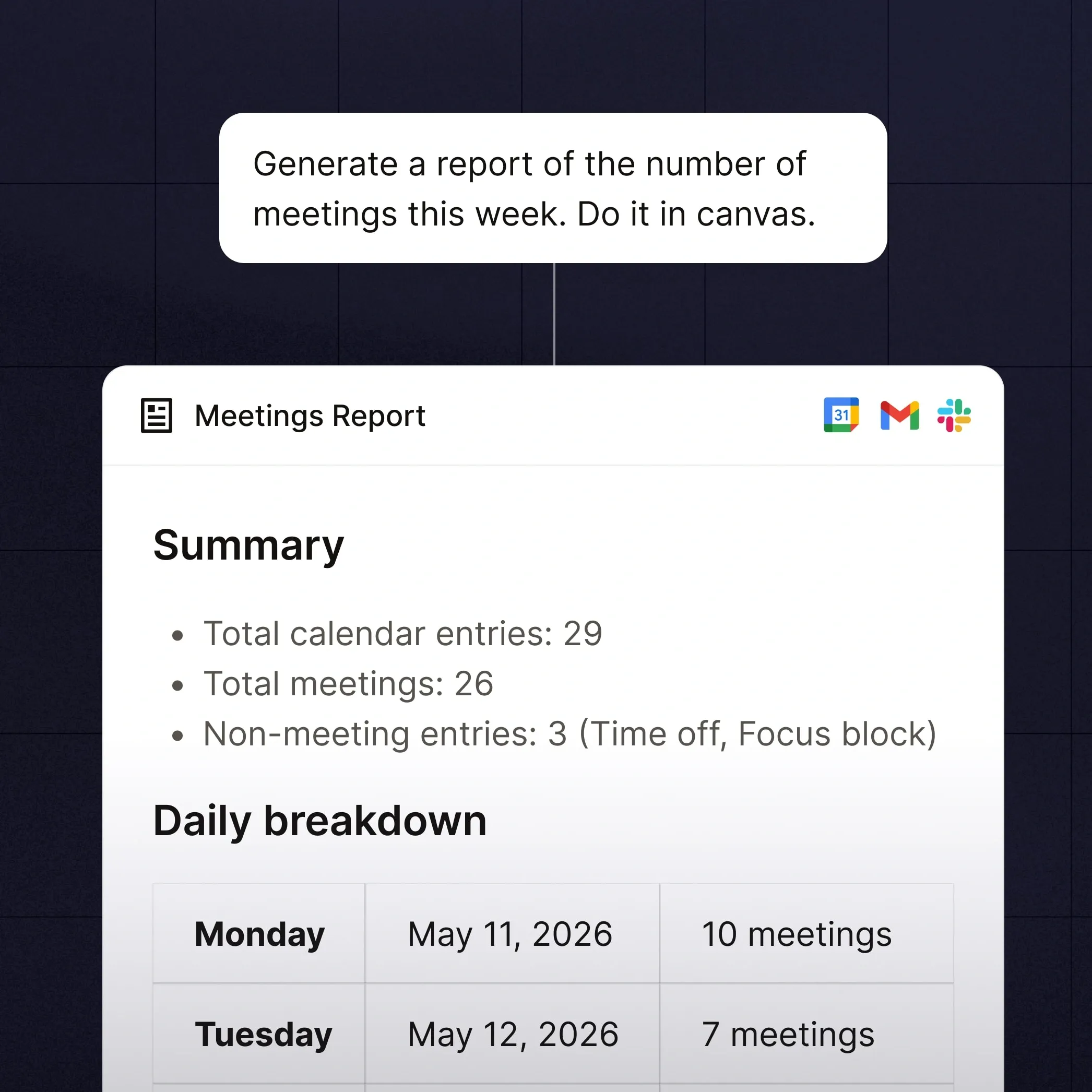
Product illustration from the official Vibe page, not a screenshot from my own hands-on test. Interface and feature availability can vary by account.
Vibe is the application; Large 4 is a model. A Vibe feature list does not prove Large 4 powers every function. The pricing page still names Devstral for coding interfaces, for example.
Subscription and API pricing
Checked 3 November 2026 against the public pricing page, displayed in USD excluding tax. Verify the final currency, tax and terms at checkout.
| Plan | Monthly price | Intended use |
|---|---|---|
| Free | USD 0 | Evaluation with limited allowances |
| Pro | USD 14.99 | Individual work and coding with higher limits |
| Team | USD 24.99 per user | Team use and administration |
| Enterprise | Quote required | Custom deployment, controls and contractual terms |
Usage limits and fair-use rules apply; a subscription is not unlimited compute. Student promotions have separate eligibility conditions and are not the standard price.
The Large 4 model page lists API rates per million tokens of USD 0.70 input, USD 0.07 cached input and USD 2.10 output. The general pricing FAQ quotes a different price for an unspecified “Mistral Large”; this article uses the specific model's rate.
An illustrative request with 10,000 input and 2,000 billed output tokens costs roughly USD 0.0112 without caching. Tools, retries, additional billed tokens and infrastructure can increase the total. Measure cost per accepted result.
A European option for sensitive data—with deployment conditions
Mistral says data is hosted in the EU by default. It also documents a US API endpoint and possible temporary transfers outside the EU depending on features and subprocessors. Enterprise customers can disable some of those features.
A European supplier provides useful architectural choices; it does not make the entire workflow GDPR-compliant automatically. Before submitting sensitive data, establish the product, region, DPA, retention, training policy and connected services. The consumer terms cover training and opt-out: personal accounts and business contracts should not be assumed to have identical conditions.
Self-hosting provides greater control while adding hardware, maintenance and security responsibilities. I cover that distinction in Mistral and sovereign deployment.
The pilot I would run
Take 30–50 anonymised cases: a bug fix with tests, a contract summary with supporting passages, support classification and invoice-to-JSON extraction. Give identical tasks to Mistral and the incumbent. Record the exact model version, reasoning setting, tools, latency, corrections and cost per accepted result.
In n8n or Make, start with a proposal that passes schema validation and business rules, then human approval before a CRM or ERP write. For code, use the equivalent sequence: change, tests, diff review and approval.
Mistral is close enough to deserve testing for performance alone. European ownership and self-hosting options add reasons to shortlist it. Your own data and deployment agreement should decide whether it goes into production.