Codex Sites: OpenAI moves vibe coding toward internal work tools

When people hear Codex, they usually imagine an agent fixing code in a repository. On June 2, 2026, OpenAI moved Codex further toward everyday company work: role-specific plugins, workflows, and Codex Sites, a way to turn a task into a shared internal site or tool.
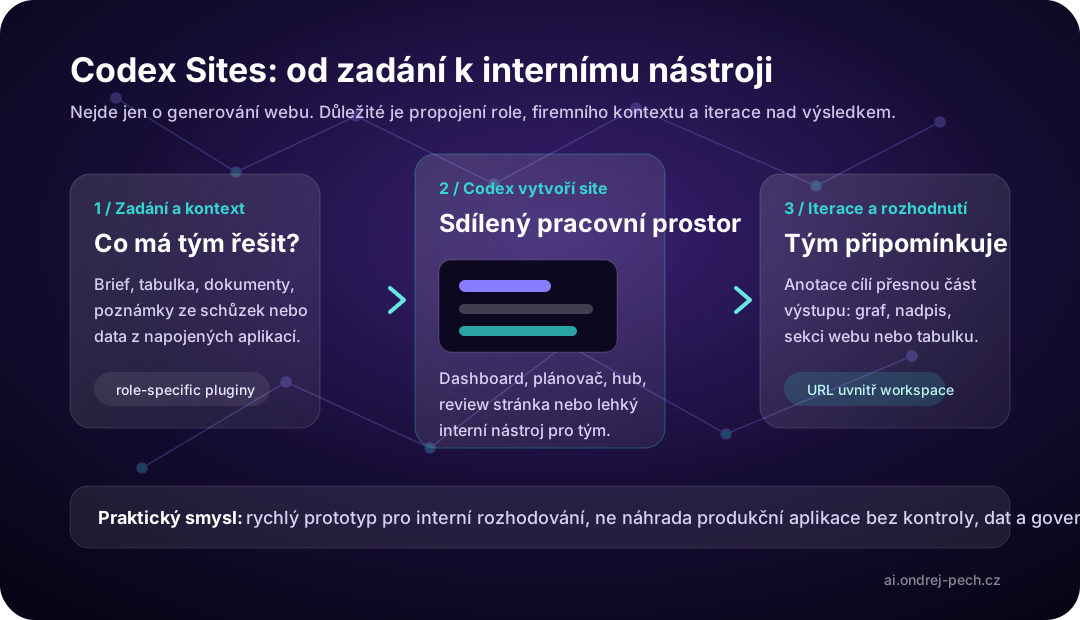
That matters because the AI agent stops looking like just a smarter terminal. In practice, it can take a brief, source material, and role context, then assemble a workspace that people can discuss, comment on, and iterate.
What is new
The strongest part is not generating a page by itself. Many tools can do that now. The interesting bit is that OpenAI is packaging Codex into role-specific workflows: it behaves differently for sales, support, internal reporting, or development.
Codex Sites add a shared output. Instead of only writing a chat response, the AI can create a small website, dashboard, review page, or work hub. The team does not have to read a long answer; it can react to a concrete artifact.
A practical example
Imagine you have meeting notes, a CRM export, and a few customer emails. Instead of manually assembling a summary, Codex can prepare an internal page:
- a priority-based summary of issues,
- a proposed next step,
- a simple dashboard,
- a section for open questions,
- material for sales or support.
It is not a final production app. It is a quick working artifact that colleagues can inspect, comment on, and move forward.
Where it makes sense
I see three strong scenarios. First, internal decision pages: a quick data summary, action plan, or option comparison. Second, small team tools that would normally never make it into a sprint because they are too small. Third, workflow prototypes before something is built properly.
For agentic work, this is a useful shift. AI is no longer handing over only text, but a more concrete work surface.
Where I would be careful
I would not treat Codex Sites as a replacement for production development yet. Internal tools still need access control, sensitive data handling, audit, integrations, and long-term maintenance. If the output starts affecting customers, money, or legal commitments, it needs normal review.
A good rule: Codex Sites are great for a first usable version and team iteration. They are not an excuse to deploy without review.
How I would use it
I would give Codex small, clear briefs. Not "build me an internal system", but for example:
- create a page for evaluating these leads,
- prepare a dashboard for the latest support tickets,
- make a review hub for a campaign plan,
- assemble an internal overview for a new process.
Then I would let a human review the output. That is the biggest value: quickly getting something people can point at.
Bottom line
Codex Sites are not just another vibe-coding feature. If OpenAI can make this work well, it could change how companies create small internal tools, decision pages, and one-off work hubs.
The biggest benefit will not be saving a few lines of code. It will be AI quickly turning a fuzzy work brief into a concrete artifact that a team can discuss.
Sources: OpenAI announcement Codex for every role: tool & workflow, OpenAI článek Codex for knowledge work and Tomáš AI video OpenAI má novou zbraň pro vibe codery: Codex Sites.