OpenAI on AWS: GPT-5.5, Codex and agents move closer to enterprise infrastructure
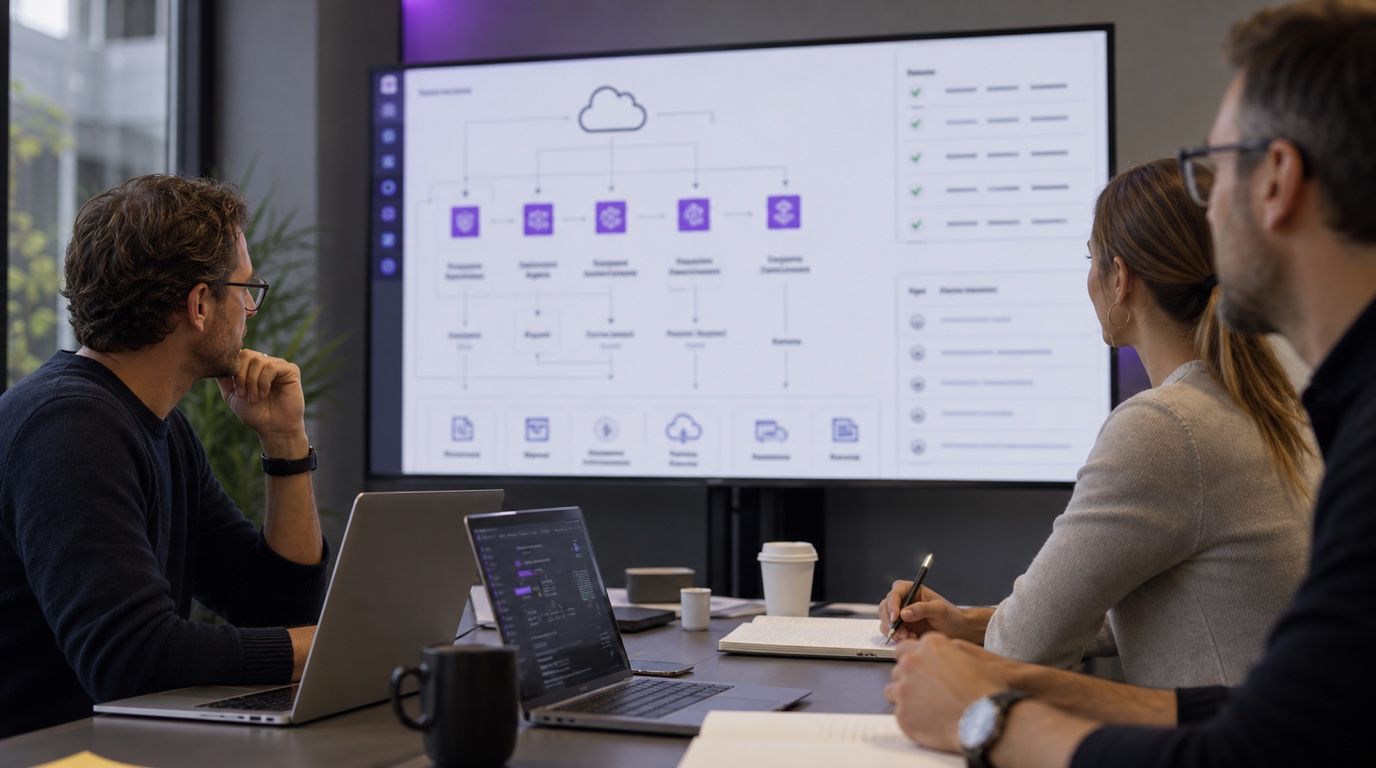
OpenAI announced on April 28, 2026 that its models, including GPT-5.5, are coming to Amazon Bedrock. The announcement also includes Codex on AWS and Amazon Bedrock Managed Agents powered by OpenAI.
This is more than another integration. For companies, the important shift is that OpenAI is moving closer to the environment where identity, procurement, logging, security and cost reporting already live.
What changes
OpenAI on AWS has three layers:
- OpenAI models available through Amazon Bedrock
- Codex on AWS for developer workflows
- Amazon Bedrock Managed Agents powered by OpenAI
Codex on Bedrock is currently in limited preview and starts with Codex CLI, the desktop app and the VS Code extension. That matters for teams that already have AWS commitments and want AI coding workflows under the same rules as the rest of their infrastructure.
What it means in practice
If your company is AWS-heavy, this changes the internal conversation. The question becomes less “can we use an external AI API?” and more “how do we configure IAM, logging, cost centers, compliance and access policies?”
That is exactly the type of shift that turns AI from an experiment into an operational tool.
Where to wait
I would not treat this as an immediate migration project. Codex on AWS is still limited preview, and large companies will need details on regions, limits, pricing, data handling and contract terms.
A good next step is one proof of concept: a developer agent, internal research agent or document workflow that is currently blocked by procurement or security requirements.
June 25, 2026 update: Jalapeño and controlled inference infrastructure
On June 24, 2026, OpenAI and Broadcom introduced Jalapeño, OpenAI's first Intelligence Processor for LLM inference. This is not a new API feature and it is not a reason to redesign your architecture immediately. It is a clear signal that OpenAI is working on model cost, latency and availability below the usual layer of buying GPU capacity.
Jalapeño is an ASIC designed for inference workloads around ChatGPT, Codex, the API and future agentic products. OpenAI says engineering samples are already running ML workloads in the lab, including GPT-5.3-Codex-Spark, but the detailed performance report is still pending. Initial deployment is planned by the end of 2026 with data center partners.
The practical point for CTOs and teams building AI workflows is straightforward: model quality is no longer the only infrastructure question. For long-running agents, Codex workflows, support classification, document extraction or internal research agents, the important questions are who controls inference capacity, how quickly it can scale, what latency looks like and whether task-level costs stay predictable.
Do not turn this into a vendor lock-in strategy yet. Treat it as another reason to design AI workflows with measured SLAs, fallback models and task budgets. If OpenAI can translate custom inference chips into lower prices, more stable availability or faster Codex runs, it will matter most in automations with repeated model calls: lead triage, CRM enrichment, email routing, invoices, support and audit steps.
Conclusion
OpenAI on AWS is not the biggest model release of the week. It is an important enterprise signal. The next phase of AI will be about how well models fit into cloud governance, cost controls and security processes.
Sources: OpenAI: OpenAI models, Codex, and Managed Agents come to AWS, AWS: Amazon Bedrock Managed Agents, powered by OpenAI, OpenAI: OpenAI and Broadcom unveil LLM-optimized inference chip, YouTube signal: Marek Bartoš.